Posts

Aviation Winter Preparation and Stocking Up for Cold Weather
Image
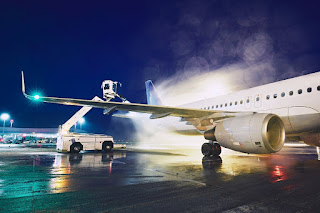
In most places, winter is going to bring disruptions and difficulties of one kind or another to an airport. In warmer climates, that can mean the increased risk of cloudbursts, electrical storms, and obscuring fog. For the colder regions, however, winter delivers an entire suite of challenges that can make everyone’s work all the more difficult. This is especially true with airside ground crews. They are dealing with all of the visibility and mobility issues of flight crews and air traffic control, on top of which they are moving baggage, piloting service carts, and driving aircraft tugs out in the elements all day. This makes planning, preparing, and stocking up for the winter particularly critical for smooth service airside. Winterizing Your GSE and Preparing Your Ground Crew Winterizing the airside ground support equipment (GSE) and ground crew requires more than outfitting the aircraft tug and baggage tractor with snow tires. It requires preparing the GSE and ...

How Risk Reduction Can Equal Cost Reduction for an Airside Ground Crew

Image
New risk reduction strategies and safety measures are often met with some trepidation. They can be considered an inconvenient disruption cluttering up the works. Industry changes, new statutes, regulations, and technological updates, however, mean that those changes are inevitable. When done right, risk reduction and safety updates, from upgrades to your aircraft tug fleet to more efficient crew conduct, can mean improved performance and therefore lower costs. There’s no reason to dread safety updates if an operation is properly prepared to roll them out. Aircraft Ground Power Unit GSE Organization Improves Everything One of the most important areas in which an airside ground crew can improve safety and lower cost, significantly when done right, is by organizing the scheduling and use of ground support equipment (GSE). An increasingly popular method for doing so is by linking, tracking, and scheduling GSE vehicles with modern telematics systems. An accompanying...

Strategies for Avoiding GSE Congestion on the Apron

Image
Any airport’s apron is necessarily a busy place. In addition to the massive aircraft arriving and departing, there are entire fleets of ground support equipment (GSE) vehicles zipping around to service them. Refueling vehicles, aircraft tugs , tractors pulling a string of baggage carts, deicers in winter, all of the lav and food service carts, plus ground crew on foot, are all active on the apron. Not to mention that on any given day there are many millions of dollars represented on the apron, not just in aircraft on the ground, but in money lost to delays. Ground crews face high expectations in a busy workspace to work quickly, safely, and to high standards. When there’s that much going on, with strict schedules to keep and so many moving parts, a lapse in oversight, management, or preparation can result in costly delays. It can also have more dire consequences by increasing the risk of accidents significantly. As such, avoiding GSE congestion should always be a pr...

When Cold Air Hits the Airside: Ground Crew and GSE Winter Preparation

Image
Airside ground crew coordination and managing every aircraft tug in a ground support equipment (GSE) fleet is a momentous daily responsibility. Preparing for future, and future conditions, is an easy task to overlook during the daily routine. With the approach of winter weather, however, taking extra time to plan can significantly improve operations when poor conditions arrive. Preparing for those conditions is going to work out far more successfully than scrambling to react when they arrive. In short, the best time to prepare for winter is before it hits. Communication Networks for Emergencies There’s no question that establishing, reinforcing, and checking up on intra-airport communication networks is crucial in case of emergencies. When well-planned and maintained, these networks also serve to improve daily operation. The lack of dedicated communication protocols and infrastructure is unfortunately common in a surprising number of aerodromes. There is often ...

The Ground Support Equipment an Airside Ground Crew Will Thank You For

Image
The responsibilities performed by airside ground crews cover a lot of territory. That means the ground support equipment (GSE) they require to do their jobs is comprised of a diverse collection of vehicles, tools, safety equipment, and stock. It’s not all baggage carts and aircraft tugs (though those are important too). Paying attention to this variety of equipment, and keeping it updated, can improve the working conditions of airside ground crews. The equipment can make their jobs efficient and less difficult, while increasing their comfort level and safety. If you manage or are otherwise responsible for equipping an airside ground crew, consider the following GSE upgrades, updates, and additions that will improve their time on the apron. Weather-Appropriate Equipment Ground support crews are often required to work outdoors regardless of the weather. For many crews, that means dealing with sweltering heat in the summer and glacial frigidity in the winter. Providin...

Sensible Seasonal Safety GSE Options for Both Urban and Rural Airports and FBOs

Image
While the basic needs of airports big and small, rural and urban, are similar, the equipment that works best to meet those needs isn’t one-size-fits-all. There’s no better example of that dynamic than the ground support equipment (GSE) best suited for seasonal safety maintenance and support. The chances are that a modest rural airport or fixed base operator (FBO) using one vehicle for multiple roles, such as aircraft pushback , deicer, and FOD-collector would find a dedicated deicing truck impractical. At the same time, an urban or busy suburban airport may find itself in trouble without such dedicated equipment. Urban Airports   Deicing Equipment In the winter months, deicing needs to happen quickly, thoroughly, and efficiently to keep the planes in the air. Even relatively short delays can cost an airline significant sums of money and the goodwill of passengers. Plus, insufficient icing can have consequences far more harrowing than lost revenue. Every ur...

Updates to GSE and Airside Technology That Save Money by Improving Efficiency and Safety

Image
Updating equipment is a difficult decision in any industry. Within the aviation airside support industry, updating, upgrading, or replacing ground support equipment (GSE) to meet environmental and safety standards is a similar conundrum. It’s considered a costly and unfortunately necessary evil, often delayed due to fear of service interruptions. However, advances in GSE technology mean that upgrading or replacing that aircraft tug or lavatory service cart can make it safer and more energy-efficient. These updates are also a great financial opportunity, rather than a burden. Safer, more efficient, and more cost-effective GSE is a win-win-win scenario. A Smart Oxygen and Nitrogen Service System Often, it’s the cumulative cost of the small, persistent wastes of time, labor, stock, and other resources that can sabotage a business, rather than big, catastrophic losses. Any way to reduce the time or number of people it takes to perform a task is a sure expense saver. A...