Posts

Reducing Passenger Carrier Delays with Efficient Ground Service
Image
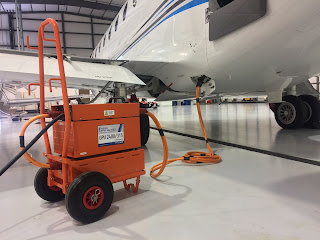
In 2018 alone, the Federal Aviation Administration (FAA) estimated that passenger carrier delays cost $28billion between direct costs to airlines and passengers, indirect costs, and reduced demand. While some causes of delays may be unavoidable, such as weather, others can be mitigated or avoided entirely by improving the efficiency of airside ground crew operations. Whether than means investing in an upgraded aircraft pushback or tug tractor, or updating crew training and communication strategies, the payoff is clearly worth it. Aircraft Ground Power Unit Dependable Air Start Service Aircraft ground power units (GPUs) see a lot of use on the airside, as aircraft start service is a must for any airport or FBO. The GPUs can go through a lot of wear and tear, between daily use and varying weather conditions, so reliability is a critical factor in efficient aircraft start service. GPUs should also feature easy mobility and handling to help crews work more quickly. Inv...
How GSE Technology Can Reduce the Risk of Human Error on the Airside

Image
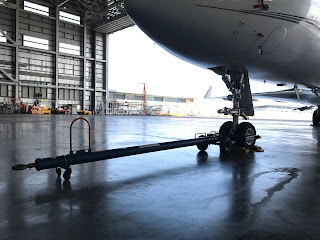
Airside ground crew employees have extremely challenging jobs, performing critical labor that keeps an airport operating efficiently. Unfortunately, no matter how hard-working and committed any group of people is, nobody is perfect: occasional mistakes are inevitable. Mistakes on the airside can have far more serious consequences than those made by members of other professions, and so reducing the possibility of human error is a significant concern for ground crew teams.  Aircraft Tug Access to a reliable aircraft tow tractor , pushback, lavatory service cart, or any other ground support equipment (GSE) is crucial to a ground crew’s success, as reliable tools alone can reduce the risk of mistakes. Better still is GSE outfitted with safety technology innovations that automatically prevent damage or simply remove human error from the equation. Tug and Pushback Overstress Protection Overstress damage to an aircraft’s nose gear is a common and costly risk with ...

How Replacing or Upgrading GSE Could End Up Saving an Aviation Business Good Money

Image
As is the case with any industry, money can be tight for ground crew operations. In many cases, it’s even tighter with high aviation industry insurance rates and the cost of maintaining fleets of sophisticated machinery. With the value of life and equipment at stake, there aren’t really any corners to cut in the name of savings. However, sometimes doing just the opposite can prove financially beneficial. Upgrading or investing in a new aircraft pushback tractor, service cart, or other ground support equipment (GSE) can not only improve productivity but can also save money. Aircraft Pushback Better GSE Requires Less Maintenance Perhaps the most obvious way that investing in new GSE or upgrading a current fleet could save an airside operation money is simply by improving functionality. New, more technologically advanced GSE from a reputable provider will typically require less maintenance and repair than older models. Improved functionality also reduces the downtime t...

Why Upgrading GSE Is Crucial for Airside Safety and Efficient Service

Image
Ground crews working on the airside face unique challenges on a daily basis. They face all of the physical demands of other labor-intensive professions: they work outdoors, with heavy machinery, and in stressful conditions. Ground crews also face additional risks. The only occupation that’s roughly comparable is road construction and maintenance, except those crews only face traffic from road vehicles. Airside crews face traditional and ground support equipment (GSE) vehicles headed in every direction, in addition to taxiing and towed aircraft with all of the noise and hazards accompanying them. These unique challenges and risks make reliable GSE crucial for safety and efficiency on the airside. Aircraft Tow Tractor Upgrade GSE to Maintain the Safety of Crews and Passengers Low-quality GSE is incredibly frustrating for its operators, and considering the importance of their jobs, it can be difficult for frustrated operators to perform at their best. Additionally, the...

Saving Money, Making Money, and Improving Efficiency for a Small Airport or FBO

Image
Ask virtually any owner or manager of a small, local airport, airstrip, or FBO and they’ll tell you that their business isn’t a road to immediate riches. It’s a labor of love. However, that doesn’t mean that being the owner of a small aviation destination can’t be exciting, fulfilling, fun, and profitable. As with any small business, success means shrewd decision making. In this case, that encompasses everything from choosing the right aircraft pushback tractor to marketing your business successfully. Consider the following suggestions for a more profitable small airport or FBO. Invest in Efficient GSE Ground support equipment (GSE) is among the most important factors in the efficient operation and continuing success of a small local airport. GSE is generally a sizable investment, making it all the more important to make good choices. It’s also a long-term investment, as a good GSE vehicle can be with an aviation business for decades. As such, one of the most important consider...

Simple Ways to Improve Crew Safety on the Ramp

Image
The airside is one of the most dynamic, fast-moving, and dangerous work environments. Workers perform heavy labor, they work exposed to the eleme nts, they’re often required to operate heavy machinery and specialized vehicles, and they have to contend with the risk of vehicles operating in close proximity. Aircraft Tug Those vehicles are heading in all directions, and vary greatly in size and speed. That includes aircraft tugs and tractors hauling baggage trains, other ground support equipment (GSE) vehicles, and of course aircraft. Thousands of tons (and millions of dollars worth) of aircraft on the ramp need to be serviced, and the safety of crews and passengers is at stake. A safe airside work environment is of absolute importance. Training and More Training This may be something of a cliché to anyone who manages grounds crews and GSE, but perhaps the simplest way to improve airside crew safety is training, training, and more training. Ensure that the entire ground crew i...

The Alarming Threat of Diesel Exhaust Fluid Fuel Contamination

Image
There are good reasons to be especially cautious airside when handling diesel exhaust fluid (DEF). Over the last 20 months, at least three incidents involving DEF fuel contamination have occurred. Two of which included Cessna Citation 550 twinjets carrying out air ambulance flights. Though all aircraft landed safely and there were no injuries, the occurrences speak to the importance of taking steps to mitigate or remove the risk of DEF contamination in fuel. The cause of these near-tragedies was the introduction of DEF into the fuel supply. The threat of DEF contamination of a fuel supply is a harrowing one, but, whether it’s by cautious loading of an aircraft tug or an update to ground crew training, with some basic precautions even near-tragedies can be averted. What is DEF? DEF is a non-hazardous fluid that, to meet federal environmental regulations, is added to the exhaust systems of diesel vehicles to break polluting emissions into water and nitrogen. While i...

Aviation Winter Preparation and Stocking Up for Cold Weather

Image
In most places, winter is going to bring disruptions and difficulties of one kind or another to an airport. In warmer climates, that can mean the increased risk of cloudbursts, electrical storms, and obscuring fog. For the colder regions, however, winter delivers an entire suite of challenges that can make everyone’s work all the more difficult. This is especially true with airside ground crews. They are dealing with all of the visibility and mobility issues of flight crews and air traffic control, on top of which they are moving baggage, piloting service carts, and driving aircraft tugs out in the elements all day. This makes planning, preparing, and stocking up for the winter particularly critical for smooth service airside. Winterizing Your GSE and Preparing Your Ground Crew Winterizing the airside ground support equipment (GSE) and ground crew requires more than outfitting the aircraft tug and baggage tractor with snow tires. It requires preparing the GSE and ...

How Risk Reduction Can Equal Cost Reduction for an Airside Ground Crew

Image
New risk reduction strategies and safety measures are often met with some trepidation. They can be considered an inconvenient disruption cluttering up the works. Industry changes, new statutes, regulations, and technological updates, however, mean that those changes are inevitable. When done right, risk reduction and safety updates, from upgrades to your aircraft tug fleet to more efficient crew conduct, can mean improved performance and therefore lower costs. There’s no reason to dread safety updates if an operation is properly prepared to roll them out. Aircraft Ground Power Unit GSE Organization Improves Everything One of the most important areas in which an airside ground crew can improve safety and lower cost, significantly when done right, is by organizing the scheduling and use of ground support equipment (GSE). An increasingly popular method for doing so is by linking, tracking, and scheduling GSE vehicles with modern telematics systems. An accompanying...

Strategies for Avoiding GSE Congestion on the Apron

Image
Any airport’s apron is necessarily a busy place. In addition to the massive aircraft arriving and departing, there are entire fleets of ground support equipment (GSE) vehicles zipping around to service them. Refueling vehicles, aircraft tugs , tractors pulling a string of baggage carts, deicers in winter, all of the lav and food service carts, plus ground crew on foot, are all active on the apron. Not to mention that on any given day there are many millions of dollars represented on the apron, not just in aircraft on the ground, but in money lost to delays. Ground crews face high expectations in a busy workspace to work quickly, safely, and to high standards. When there’s that much going on, with strict schedules to keep and so many moving parts, a lapse in oversight, management, or preparation can result in costly delays. It can also have more dire consequences by increasing the risk of accidents significantly. As such, avoiding GSE congestion should always be a pr...

When Cold Air Hits the Airside: Ground Crew and GSE Winter Preparation

Image
Airside ground crew coordination and managing every aircraft tug in a ground support equipment (GSE) fleet is a momentous daily responsibility. Preparing for future, and future conditions, is an easy task to overlook during the daily routine. With the approach of winter weather, however, taking extra time to plan can significantly improve operations when poor conditions arrive. Preparing for those conditions is going to work out far more successfully than scrambling to react when they arrive. In short, the best time to prepare for winter is before it hits. Communication Networks for Emergencies There’s no question that establishing, reinforcing, and checking up on intra-airport communication networks is crucial in case of emergencies. When well-planned and maintained, these networks also serve to improve daily operation. The lack of dedicated communication protocols and infrastructure is unfortunately common in a surprising number of aerodromes. There is often ...

The Ground Support Equipment an Airside Ground Crew Will Thank You For

Image
The responsibilities performed by airside ground crews cover a lot of territory. That means the ground support equipment (GSE) they require to do their jobs is comprised of a diverse collection of vehicles, tools, safety equipment, and stock. It’s not all baggage carts and aircraft tugs (though those are important too). Paying attention to this variety of equipment, and keeping it updated, can improve the working conditions of airside ground crews. The equipment can make their jobs efficient and less difficult, while increasing their comfort level and safety. If you manage or are otherwise responsible for equipping an airside ground crew, consider the following GSE upgrades, updates, and additions that will improve their time on the apron. Weather-Appropriate Equipment Ground support crews are often required to work outdoors regardless of the weather. For many crews, that means dealing with sweltering heat in the summer and glacial frigidity in the winter. Providin...

Sensible Seasonal Safety GSE Options for Both Urban and Rural Airports and FBOs

Image
While the basic needs of airports big and small, rural and urban, are similar, the equipment that works best to meet those needs isn’t one-size-fits-all. There’s no better example of that dynamic than the ground support equipment (GSE) best suited for seasonal safety maintenance and support. The chances are that a modest rural airport or fixed base operator (FBO) using one vehicle for multiple roles, such as aircraft pushback , deicer, and FOD-collector would find a dedicated deicing truck impractical. At the same time, an urban or busy suburban airport may find itself in trouble without such dedicated equipment. Urban Airports   Deicing Equipment In the winter months, deicing needs to happen quickly, thoroughly, and efficiently to keep the planes in the air. Even relatively short delays can cost an airline significant sums of money and the goodwill of passengers. Plus, insufficient icing can have consequences far more harrowing than lost revenue. Every ur...

Updates to GSE and Airside Technology That Save Money by Improving Efficiency and Safety

Image
Updating equipment is a difficult decision in any industry. Within the aviation airside support industry, updating, upgrading, or replacing ground support equipment (GSE) to meet environmental and safety standards is a similar conundrum. It’s considered a costly and unfortunately necessary evil, often delayed due to fear of service interruptions. However, advances in GSE technology mean that upgrading or replacing that aircraft tug or lavatory service cart can make it safer and more energy-efficient. These updates are also a great financial opportunity, rather than a burden. Safer, more efficient, and more cost-effective GSE is a win-win-win scenario. A Smart Oxygen and Nitrogen Service System Often, it’s the cumulative cost of the small, persistent wastes of time, labor, stock, and other resources that can sabotage a business, rather than big, catastrophic losses. Any way to reduce the time or number of people it takes to perform a task is a sure expense saver. A...

How Your Small Airport or FOB Can Compete with Bigger Airports

Image
It can be difficult running any small business in a field shared by far bigger ones. Big businesses have a number of advantages (like an aircraft tug fleet, in this case) over their smaller competitors. They have more resources and they offer more amenities. They have a far more robust advertising budget, and perhaps most importantly, they have name recognition. They’re an established presence and a well-known among potential customers and clients.  That dynamic can prove disheartening for smaller businesses. Small airports and forward operating bases (FOBs) face these struggles too. However, being small has advantages that no big airport can match. Here are some key distinctions that every airdrome owner or manager should focus on in order to attract personal planes as well as private, corporate, and executive aircraft.  Less Stressful Approaching, Landing, and Taxiing The bigger an airport gets, the busier it gets. That doesn’t just apply to aircraft a...

Innovations for a Cleaner, Greener Airside Work Environment

Image
Many industries, aviation included, are pushing for cleaner, lower-emission, more environmentally friendly solutions. Many of the green initiatives related to the aviation industry have been dedicated to lowering the emissions of aircraft. While reducing the emissions of aircraft is often the biggest focus, there are other areas for improvement. The efficiency of aircraft tugs and other airside equipment is also a concern for any environmentally conscious airport.  Every major airport has a number of aircraft tugs and other ground support equipment (GSE) vehicles in operation. These include baggage and staircase vehicles, aircraft tow tractors, hauling carts, refuelers, ground power units, and others. Any effective strategies for cleaner, greener aviation must incorporate steps to lighten the carbon footprint of both the aircraft and the airside. Switching to Electric GSE Among the biggest of the global aviation environmental initiatives is the push for movi...

Eliminating Common Pain Points for Airside Ground Crews

Image
Being a member of an airside ground crew is already stressful enough. On top of the high-dollar, high-stress, fast-moving, and physically demanding nature of the work, it’s a dangerous place to be. They’re working in and around aircraft pushback tugs, tow tractors, baggage carts, and the other ground support equipment (GSE) in operation, not to mention the massive airliners. The last thing someone in a such a sensitive workplace needs is the addition of extra pain points, or an avoidable failure. Communication Within a Ground Crew Communication is likely the most effective way for a work crew to improve the safety and efficiency of their operations. In addition to the general communication protocols between operators of GSE, the ground operations manager, and anyone else pertinent, specific training for communication during stressful events or emergencies is extremely important. Incorporating communication-enhancing technology can also make a big difference. That technology inclu...